
Why Most Jewelry Side Hustles Fail Within 6 Months
Jewelry making remains a viable side hustle, but requires careful attention to startup costs ranging from $2,000-$5,500 and material pricing strategy. Success depends on offering personalized designs, managing the 20% increase in material costs, and pricing each piece correctly from the start.
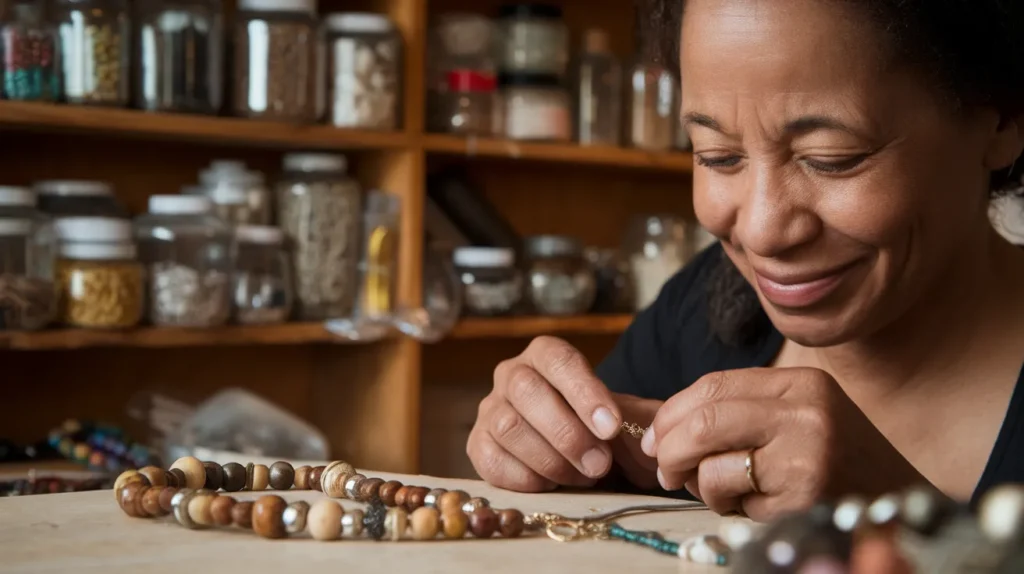
Making Jewelery - Side Hustle - Still Working?
Making jewelery – Side hustle – still working? Yes, but success comes down to three realities. Buyers want personalized designs you make yourself. Material costs jumped 20 percent this year. Your profit depends on pricing each piece correctly from day one.
Making jewelery – Side hustle – still working? It Depends on Your Starting Costs
Most jewelry makers report median startup costs around $3,500. Home-based operations can start with as little as $2,000 to $5,500. This covers basic tools, starter inventory, simple branding, and online setup. You don’t need a workshop to begin.
A basic home setup across most styles requires $100 to $250 in tools to start. The bulk of your initial spend goes to materials. Silver wire and sheet metal costs approximately $20 to $30 per ounce, providing enough material for creating 20 to 50 pieces at $100 to $300. Gold is different. Prices fluctuate wildly. Many new makers start with gold-filled options to keep costs down.
The easy-to-miss costs are the recurring fees and operating overhead, not the jewelry materials. In Year 1, ecommerce and payment fees can take 30% of revenue and branded packaging and shipping can take 40%. Fixed overhead totals $2,500 monthly before payroll.
Photography matters more than most beginners realize. Professional jewelry photography sessions cost $200 to $600, or a decent DIY setup with proper lighting runs $150 to $300. Jewelry is difficult to photograph well. Reflective surfaces demand effort.
Can You Actually Make Money Making jewelery – Side hustle – still working?
Average revenue is $2.98 million per year with an estimated gross margin of 43%. That’s the industry benchmark for established operations. Your results will vary wildly based on how you price and where you sell.
Average income for a handmade jewelry business owner in the United States typically falls between $30,000 and $60,000 annually. Part-time handmade jewelry business owners often see earnings in the range of $20,000 to $40,000 annually. Full-time founders with strong online sales and wholesale accounts can push into six figures.
At $30,000 to $100,000 annual revenue, income is often $10,000 to $25,000, functioning as a side hustle. The founder is likely still working another job. This is the reality for most makers in the first two years.
A beautiful pair of earrings that might cost $5 to $15 to produce can easily sell for $45 to $75 or more. This healthy profit margin makes it possible to generate meaningful income even with modest sales volume. Pricing correctly from the start determines whether you work for free or build a real business.
A pair of earrings that costs a few dollars in materials can sell for five or ten times that. Customers pay for design and the handmade story, not the raw beads. That gap between cost and price is what makes jewelry attractive.
How Long Until Your Jewelry Side Hustle Pays You Back
The business reaches operational breakeven in 26 months. However, the initial capital investment takes 40 months to pay back, reflecting the high upfront marketing spend needed for scale. This is longer than most beginners expect. You need working capital to bridge the gap.
In the first year, many ecommerce founders reinvest all profits back into inventory and advertising, effectively paying themselves nothing. This is a crucial reality check for anyone expecting to replace their corporate salary immediately. Treat year one as a test phase, not a paycheck replacement.
At $100,000 to $300,000 annual revenue, income is $40,000 to $60,000, allowing for full-time transition. This is the inflection point where the business can support a modest lifestyle. Getting there requires consistent sales and strict cost control.
Within three months, jewelry brand income was generating about 40% of full-time salary, from just 5 to 7 hours of weekly effort. This is possible when you nail product-market fit early. Most founders take longer.
Making jewelery – Side hustle – still working? Etsy Shows Mixed Signals
Jewelry sellers continue to dominate Etsy, with CaitlynMinimalist leading at over 3.7 million sales as of early 2026, followed by SilverRainSilver with more than 2 million sales. Top sellers prove the platform still works for jewelry. The question is whether new sellers can break through.
The jewelry category comprises about 6.6 million sellers creating $2.5 billion in quarterly sales. Competition on Etsy remains fierce, despite a dip in the total number of active sellers falling from 7 million in 2024 to 5.4 million in early 2025. Fewer sellers doesn’t mean less competition. It means stronger players remain.
Jewelry remains one of Etsy’s strongest buyer-fit categories because shoppers expect handmade, personalized, giftable, symbolic, and niche designs. A seller should not enter with generic necklaces, rings, or earrings unless they have a clear differentiation angle. Generic jewelry gets buried instantly.
Most buyers on Etsy expect to pay more for handmade jewelry, and a $22 listing often converts better than a $14 listing because buyers perceive it as higher quality. Underpricing kills your business faster than high prices do. Customers on Etsy aren’t shopping for the cheapest option.
Etsy’s fees include $0.20 per listing, a 6.5% transaction fee, and a payment processing fee. These costs add up quickly. Calculate them into every price before listing.
Material Costs Are Crushing Margins in 2026
Gold prices peaked near ,400 per ounce in late 2025, surging past ,000 per ounce and forcing jewelry makers to shift strategies dramatically. Many are reducing the weight of solid gold pieces or pivoting to more affordable alternatives like gold-filled and vermeil—materials that use less precious metal while maintaining the appearance and durability of solid gold. Gold-filled jewelry contains a thick layer of gold bonded to base metal, while vermeil features gold plating over sterling silver. These alternatives allow makers to offer luxury aesthetic at lower material costs, protecting profit margins while keeping retail prices competitive for price-sensitive customers.
Upfront investments in ethically-sourced materials increase the initial cost of goods sold by as much as 20 to 30%. Ethical sourcing is no longer optional. Nearly 65% of Millennials and Gen Z customers are willing to pay a premium for sustainably sourced jewelry. They demand proof, not vague claims.
Raw materials, artisan labor, shipping, and fees leave about 80.5% to 86% of revenue after direct costs, so small waste hits owner income fast. Every mistake or piece of scrap metal directly cuts your profit. Waste management becomes critical at this margin.
Silver offers better control. Silver wire and sheet metal costs approximately $20 to $30 per ounce, making it the most affordable precious metal option for new jewelers. Starting with silver lets you test designs without massive material risk.
Making jewelery – Side hustle – still working? Customer Trends Say Yes for Personalization
The appeal of personalized jewelry continues to be one of the fastest growing segments of the jewelry industry as consumers continue to lean toward items that hold sentimental value versus passing seasonal fashion trends. 72.8% of consumers purchase jewelry as a meaningful gift, and 54% plan to purchase a necklace. Gifting drives sales.
A January 2026 McKinsey study found that 67.4% of jewelry buyers aged 18 to 44 now expect some form of product customization. Brands offering AI-driven design configurators reported a 28.3% higher conversion rate and a 19.7% increase in average order value. Personalization isn’t a trend. It’s table stakes.
In 2026, the biggest trends include personalized, minimalist, and dainty jewelry, such as initial necklaces, birthstone pieces, and stacking rings. Family-focused jewelry, birthstones, and personalized name designs continue to dominate demand, and consumers are increasingly willing to pay more for jewelry that carries emotional significance. Emotional connection drives higher prices.
When asked what categories they want to see expanded, shoppers chose modular charms at 44.0% demand and children’s jewelry at 33.0% demand. Consumers want interactive jewelry, a foundational piece like a solid link chain or bracelet that allows them to add new elements over the years. This creates repeat purchase opportunities.
The single most consequential behavioral shift in the 2026 jewelry market is the normalization of self-purchasing, as jewelry was historically positioned as a gift, a milestone marker, or a bridal purchase. According to a BriteCo survey of 2,000 Americans conducted in October 2025, 80% of adults aged 18 and older are now more likely to buy fine jewelry for themselves. Women buying for themselves is now the biggest customer segment.
Frequently Asked Questions
Is making jewelry as a side hustle still profitable in 2026?
Yes, but profit depends on pricing correctly and controlling material costs. Average side hustle income ranges from $10,000 to $25,000 annually at modest sales volume. Personalization drives higher margins and repeat customers.
How much does it cost to start a jewelry-making side hustle?
Most home-based jewelry makers start with $2,000 to $5,500 for tools, materials, and basic branding. Median startup costs across all jewelry businesses are around $3,500. Photography and packaging add another $500 to $800.
How long does it take to make money selling handmade jewelry?
Most jewelry businesses reach operational breakeven in 26 months. Initial capital investment takes 40 months to pay back. Many founders reinvest all profits in year one and pay themselves nothing.
Can I still sell jewelry on Etsy and make money?
Yes, but competition is fierce with 6.6 million sellers in the jewelry category. Success requires clear differentiation, strong photography, and personalized designs. Generic jewelry listings get buried quickly.
What jewelry trends are selling best in 2026?
Personalized and family-focused jewelry dominate, including birthstone necklaces, initial pieces, and modular charms. Self-purchasing by women aged 18 and older now accounts for 80% of fine jewelry buyers. Emotional significance outperforms fashion trends.
Start with three personalized designs, calculate your material and fee costs for each piece, and test sales for 90 days before expanding inventory.


